

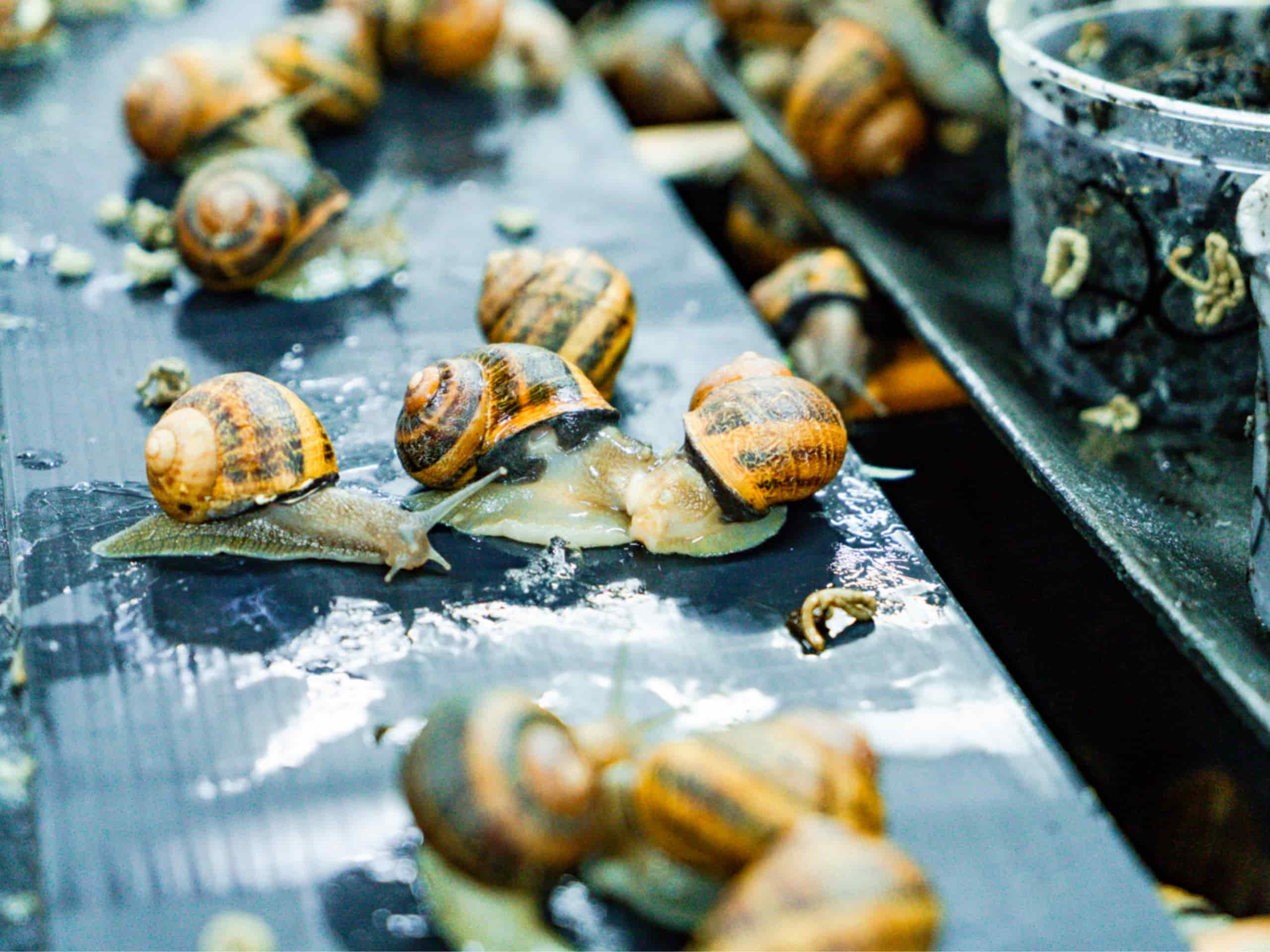
In the coastal river plots of Swakopmund, André Mouton is running an operation that shouldn’t technically be possible in a desert environment. His business, Namsnails, manages over a million snails at any given time, producing a million new hatchlings every single week.
While most snail farms globally are seasonal – shutting down when the weather turns – André has built a year-round process. He’s managed this by treating Almar reefer containers as more than just cold storage; they are the “pause button” for his production line.
The Problem: Nature’s Clock
Snails are sensitive. In the wild, they follow the weather. If it’s too cold, they hibernate; if it’s too hot, they shut down. For a business trying to supply a steady stream of product to the global food service market, this “on-again, off-again” cycle is a logistical nightmare.
To keep the farm moving every day of the year, André needed a way to control the climate exactly, moving snails through different life stages on his own schedule.
The Lifecycle: From Egg to Export
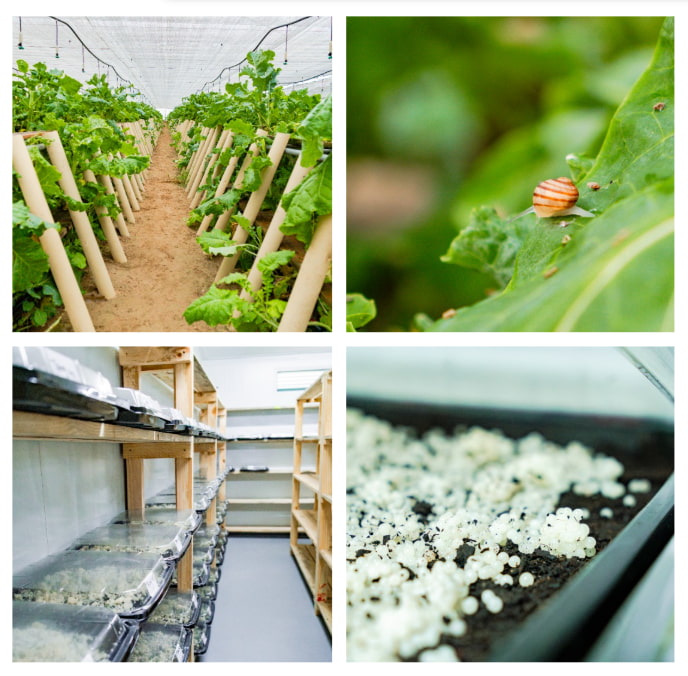
The process at Namsnails is a continuous loop. Every day, new “mother” snails are placed in the breeding houses to lay their eggs.
- The Hatchery: Once the eggs are laid, they are carefully harvested and moved to a specialized hatchery. Here, moisture and temperature are managed with extreme care until they hatch into tiny, fragile juveniles.
- The Growth Phase: These juveniles are introduced into one of three climate-controlled houses. To keep them healthy and growing, André mimics a perfect natural environment: hydrating them during the day to keep the area cool and irrigating at night to bring the humidity up to a lush 90%.
- The Diet: They are fed a formulated feed specific to snails, supplemented with fresh green leafy vegetables to ensure they reach their target weight quickly.
The Solution: The Four-Phase Cold Chain
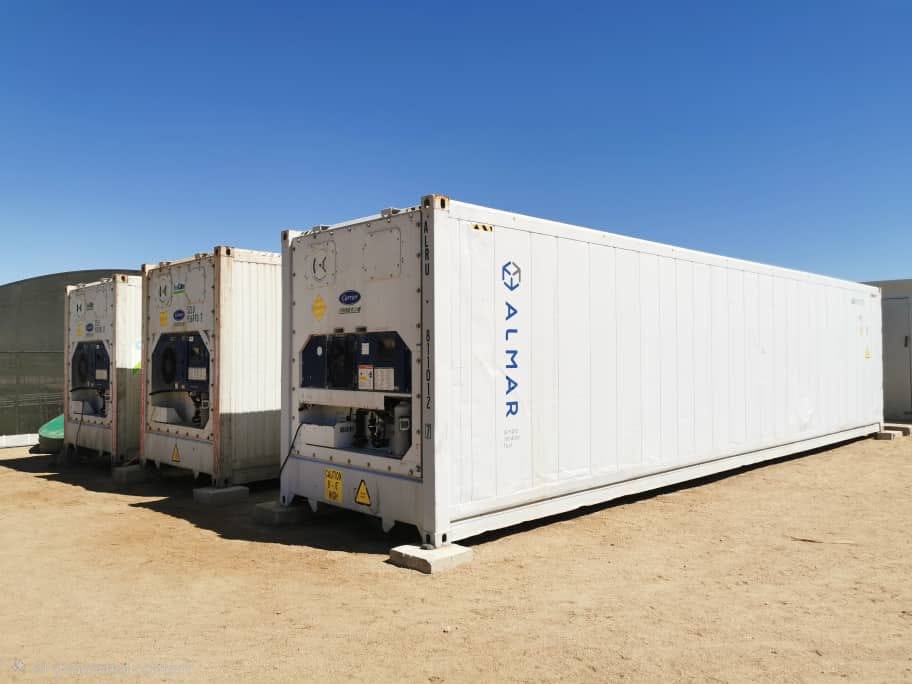
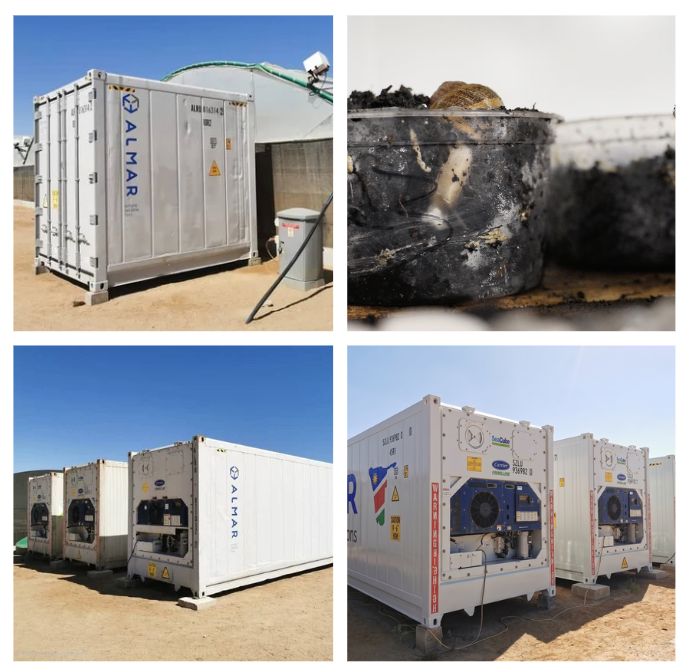
Once the snails reach maturity, the Almar reefers take over. Namsnails uses a mix of three 12m reefers and one 3m unit to act as biological control chambers:
1. The 6-Degree Trigger
To get the snails ready for the next phase, they need to enter hibernation. André sets his Almar reefers to exactly 6° celsius. The precision of the airflow in these units is vital; if the temperature fluctuates even a few degrees, the snails won’t hibernate uniformly. The reefers provide a stable, “synthetic winter” that André can trigger whenever a batch is ready.
2. Sorting and Selection
Once in hibernation, the team sorts the snails. The “fastest growers” are hand-picked to become the future breeders.
- These elite snails are kept in dedicated reefer storage for as long as required.
- The 3m reefer is the workhorse here. Because it’s smaller, it’s perfect for managing these specialized sub-groups without the energy cost of running a full-sized 12m unit.
3. Weight Stabilization
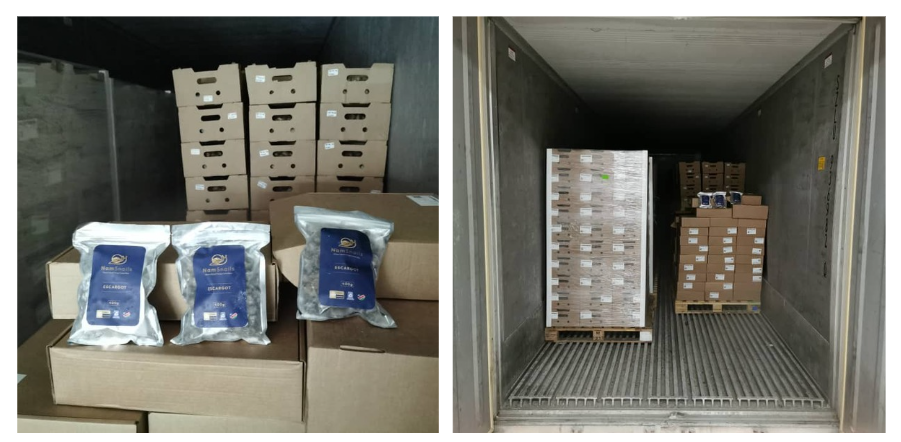
Snails are primarily water and lose weight quickly if not handled correctly. To keep the product at its premium market weight, the snails destined for processing are frozen immediately. This “locks in” the mass, ensuring that what is harvested in Namibia is exactly what arrives at a restaurant in other countries.
Why the "Box" Approach Works
For NamSnails, using Almar reefers instead of permanent buildings came down to flexibility.
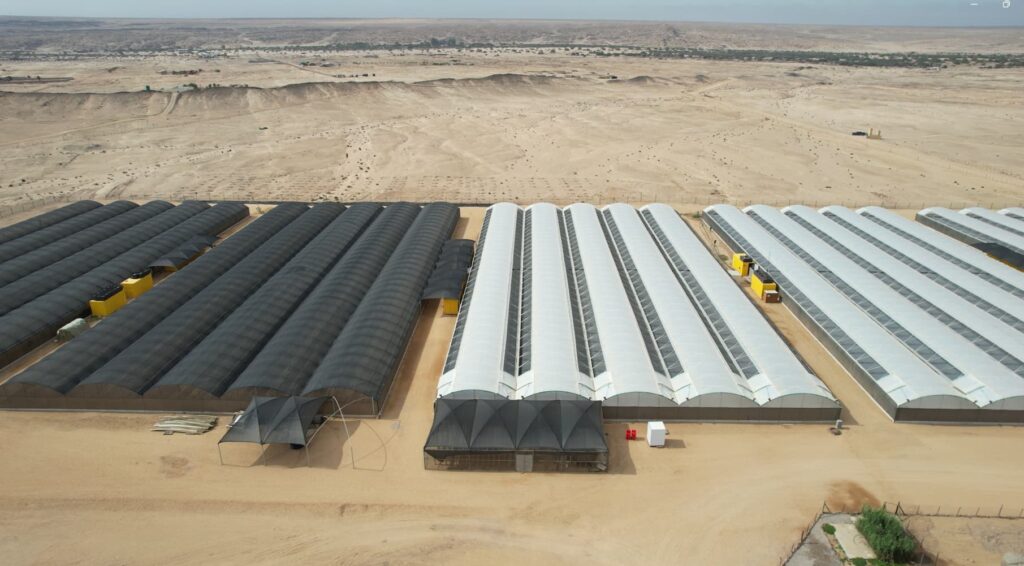
On the Namsnails site map, there is a clear distinction between “white roofs” (finished buildings) and “black roofs” (areas still to be developed). By using reefers, André doesn’t have to wait for construction to finish to expand his capacity.
- Scalability: As the population grows, he simply adds another 12m unit.
- Reliability: With a vet visiting weekly to monitor health, the equipment’s reliability is non-negotiable. If a unit fails, the biological cycle of millions of snails is at risk.
The Bottom Line
Namsnails has moved away from the old way of “waiting for the right season.” By using Almar’s mobile cooling technology, they’ve created a predictable, industrial process that produces a consistent, high-quality product 365 days a year. It’s a smart, modular way to build a business that is as much about biology as it is about logistics.
See how Namsnails is setting a new standard for Namibian agriculture. Explore their full story and see their facility at namsnailfarming.com.