

Shipping containers have become a practical storage solution for businesses across a wide range of industries. From construction sites and agricultural operations to retail outlets and manufacturing facilities, they provide secure, durable and flexible storage wherever additional space is needed.
However, one of the first decisions businesses face is whether to rent or buy a shipping container. Both options have their advantages, and the right choice depends on how long you need the container, your available budget and your future operational requirements.
When Renting a Shipping Container Makes Sense
Renting is often the more practical option for businesses that need additional storage without committing to a large upfront investment.
Short-Term Projects
Construction projects, seasonal agricultural operations, temporary retail storage and site renovations often require additional space for a limited period. Renting allows businesses to access storage for the duration of a project without having to manage an additional asset once the project is complete.
Lower Upfront Costs
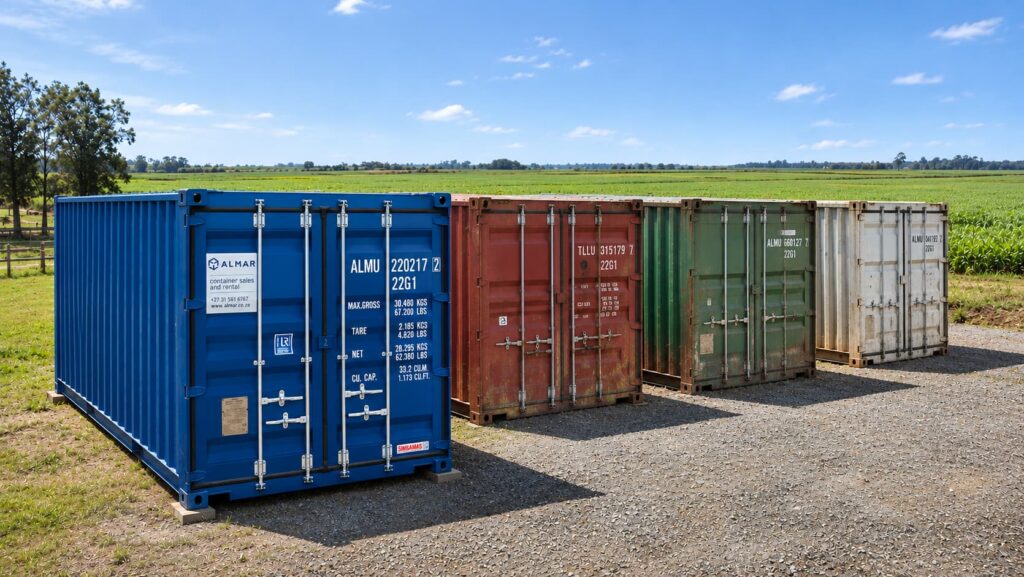
Purchasing a container requires an initial capital investment. Renting spreads the cost over time, allowing businesses to preserve cash flow and allocate funds to other operational priorities.
This can be particularly beneficial for growing businesses or companies managing multiple projects simultaneously.
Flexibility as Your Business Changes
Storage requirements are not always predictable. A business may need additional containers during peak periods and fewer during quieter months.
Renting provides the flexibility to adjust storage capacity as requirements change, subject to the agreed rental terms.
Reduced Long-Term Responsibility
When renting, businesses do not need to consider the eventual resale or disposal of the container. Maintenance responsibilities may also be shared with the supplier, depending on the rental agreement.
When Buying a Shipping Container Makes Sense
For businesses with established, long-term storage requirements, purchasing a shipping container can offer greater financial and operational benefits.
Permanent Storage Requirements
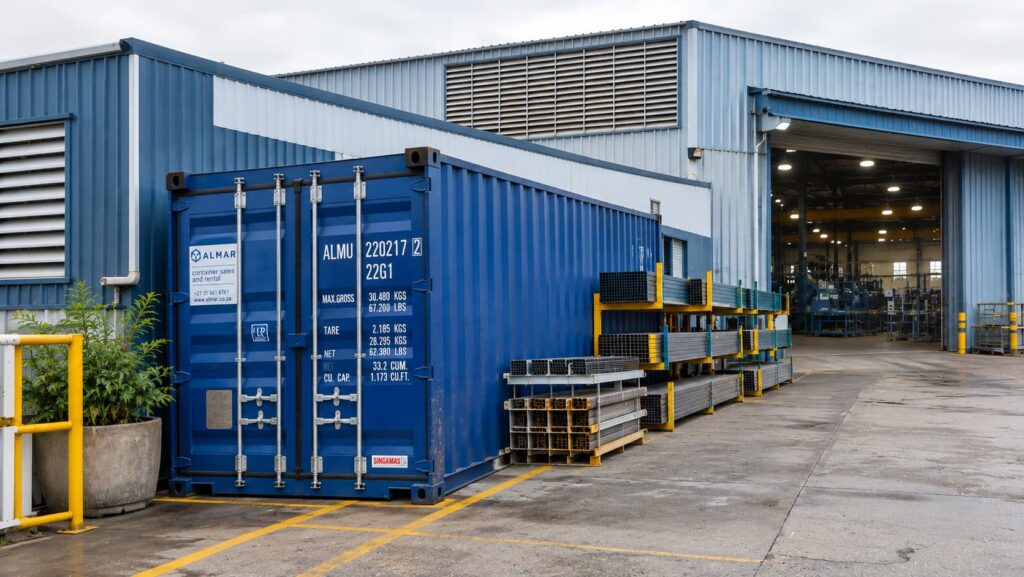
If your business requires additional storage on an ongoing basis, purchasing a container may be more cost-effective over its useful lifespan.
Warehouses, farms, manufacturing facilities and commercial properties can benefit from having dedicated storage space readily available.
Long-Term Cost Savings
While buying requires a larger initial investment, it eliminates recurring rental payments. Over an extended period, the total cost of renting could exceed the original purchase price of a container.
Businesses should consider the expected period of use alongside maintenance and other ownership costs when comparing the two options.
Greater Control Over Your Asset
Owning a container gives businesses greater control over how it is used and maintained, without the restrictions that may apply under a rental agreement.
Potential Resale Value
A well-maintained shipping container can retain resale value. Should your storage requirements change, you may be able to sell the container and recover a portion of your initial investment.
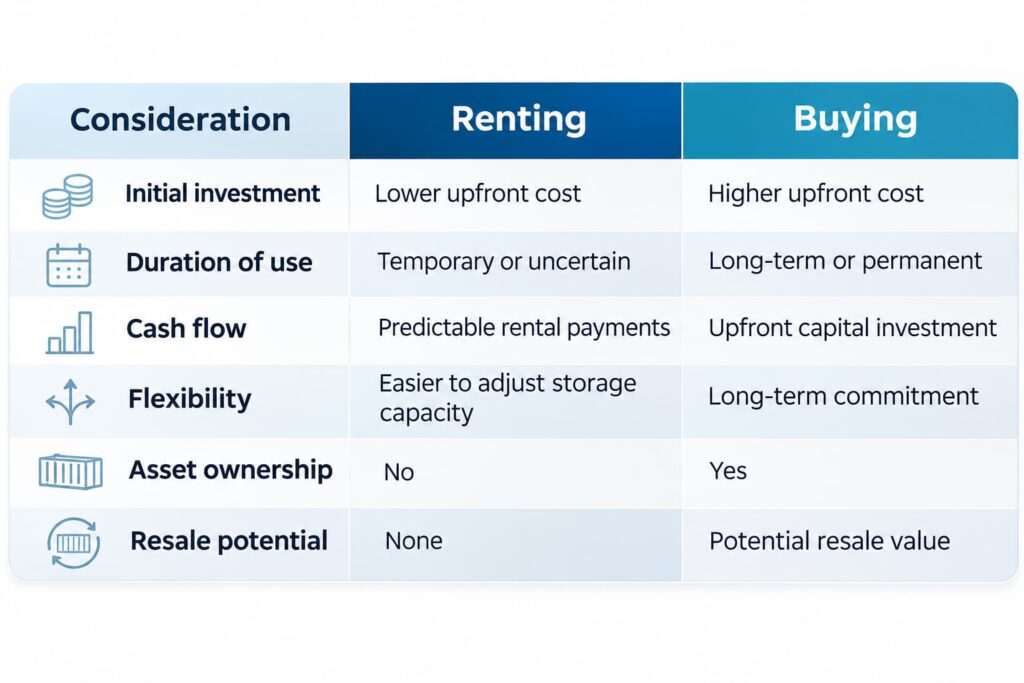
Renting vs Buying: A Quick Comparison
Understanding the True Cost of a Shipping Container
The decision should not be based on the rental rate or purchase price alone. There are several additional factors worth considering:
- Delivery and collection costs
- Site preparation requirements
- Container size and condition
- Maintenance and repairs
- Expected duration of use
- Potential resale value
For example, a business requiring temporary storage for a six-month construction project may find renting more economical. A manufacturing facility requiring permanent storage for equipment and spare parts may benefit more from purchasing.
Comparing the total cost over your expected period of use will provide a clearer indication of which option offers better value.
Making the Right Decision for Your Business
There is no single answer when it comes to renting or buying a shipping container. Renting offers flexibility and lower upfront costs, while buying can provide long-term value and greater control.
Every business has different storage requirements. With both rental and purchase options available, our team can help you find the right container solution to suit your operational needs, budget and intended duration of use. Whether you need temporary storage for an upcoming project or a permanent solution for your business, choosing the right container arrangement can make a meaningful difference to your operational efficiency and costs.
Contact our team to discuss your shipping container rental or purchase requirements.