

Taking delivery of a shipping container is an exciting milestone for any business. Whether you are expanding your storage capacity, setting up a reliable cold chain solution, or optimizing your regional logistics footprint, a container provides immediate, secure, and flexible infrastructure exactly where you need it.
However, a successful delivery doesn’t happen by accident. Shipping containers are large, heavy pieces of engineering, and the vehicles that deliver them require ample space and a solid foundation to operate safely. At Almar Container Group, we want your delivery day to go as smoothly as possible. This practical guide covers exactly what to expect on the day and how to prepare your site to ensure a seamless drop-off.
Understand Your Equipment and Delivery Mechanism
The type of container you have ordered dictates both its site requirements and how it will be delivered. Different units serve distinct operational purposes across various industries:
Dry Storage Containers
The versatile, robust workhorses of industries ranging from manufacturing to retail. These require a flat, level surface and clear access, but no utility connections.
Refrigerated Containers & Reefer Containers
Vital for agriculture, fresh produce and pharmaceutical sectors. Beyond physical space, these units require a specific, compliant power source to control internal temperatures reliably.
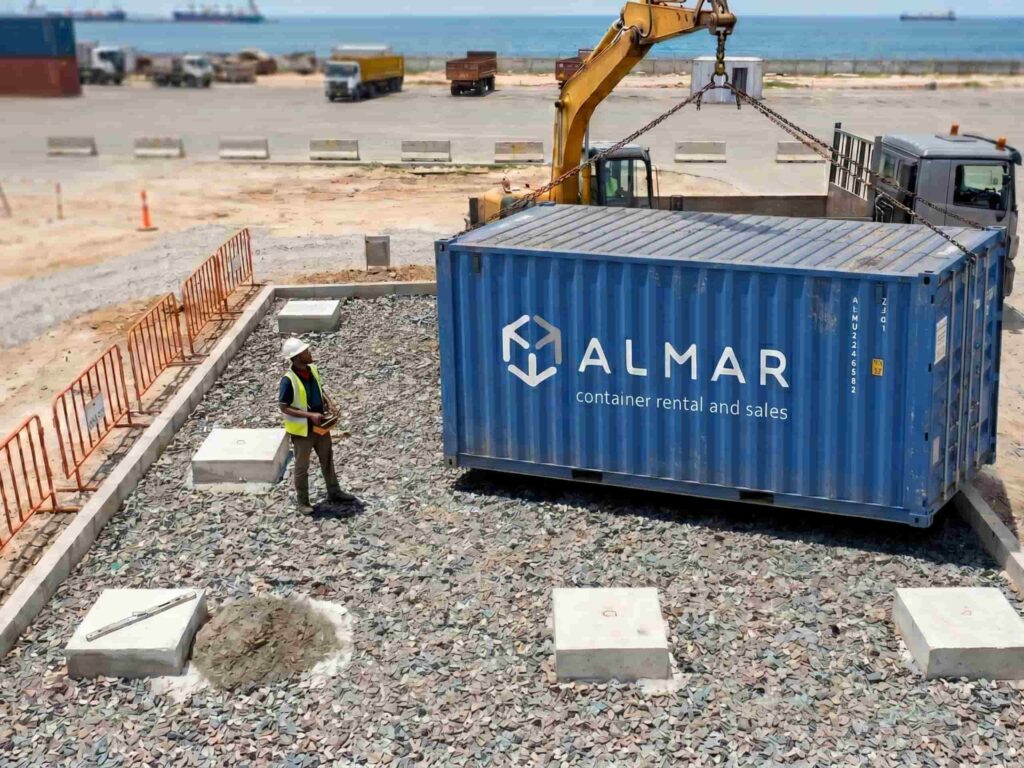
Delivery is typically executed via a crane truck (HIAB) or a sidelifter. A crane truck lifts the container from above and swings it into position adjacent to the vehicle, while a sidelifter drops the container parallel to the trailer on the driver’s side. Knowing which vehicle is coming helps you map out the exact path and final resting spot.
Clear the Access Route
A delivery truck needs a clear path long before it reaches the exact spot where the container will sit. Consider the route from the main access road all the way to your property gates and drop zone:
Clearance Heights
Check for low-hanging tree branches, overhead power lines, entrance arches, or facility gates. Delivery vehicles require at least 5 meters of vertical clearance.
Turning Radii
A standard truck carrying a 20ft or 40ft container is long and rigid. Ensure there are no tight corners, parked cars, or narrow alleyways that could trap or restrict the vehicle.
Ground Conditions
Depending on the season – particularly during the rainy periods – unpaved approach roads can become soft and muddy. A heavy delivery truck can easily sink or get stuck. Ensure the access path is compacted, dry and capable of supporting heavy axle loads.
Delivery Tip
Always inform the Almar team of any specific site quirks, such as steep gradients, sharp bends, or restricted operational hours within your commercial zone.
Prepare the Ground (The Foundation)
Where your container rests matters tremendously for its long-term functionality. If a container sits on uneven or sinking ground, the frame can twist slightly over time. This subtle twist can cause the heavy lock rods and doors to jam or become incredibly difficult to open and close.
Ideally, your site should be level, firm and well-drained. Excellent options include:
Thick concrete slabs
Compacted gravel beds
Asphalt or paved yards
If you are placing the unit on bare ground or grass, we highly recommend positioning concrete paving blocks or treated timber sleepers under the four corners of the container. This elevates the structure slightly, protects the base from pooling ground moisture, and prevents it from settling unevenly into the earth.
Specialized Site Preparation for Reefer Containers
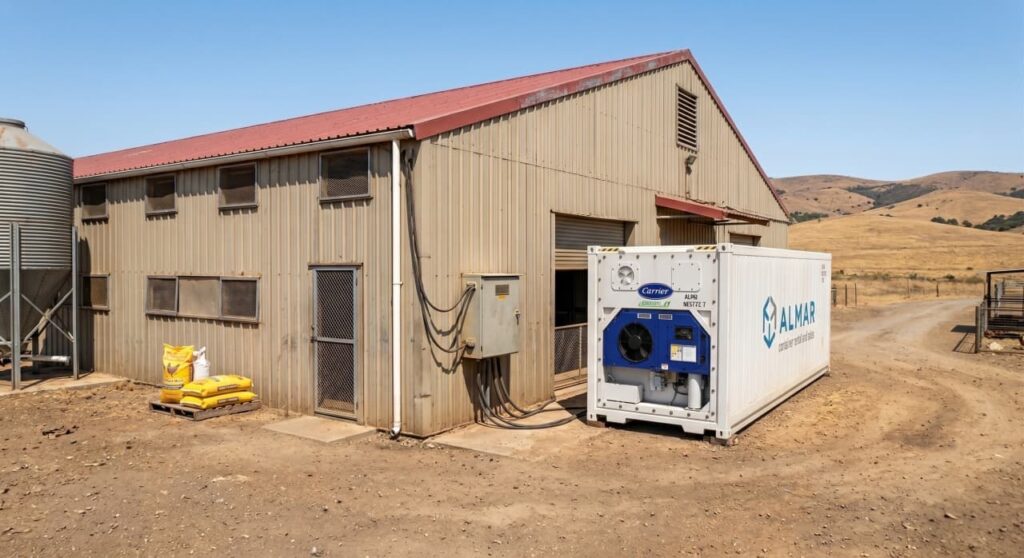
If you are receiving a Refrigerated Container, physical space is only half the battle. To keep your cold chain intact and your temperature-sensitive cargo secure, your power supply must be ready to go prior to truck arrival:
Power Requirements
Standard reefers run on 380V – 460V three-phase power (50Hz or 60Hz). A standard domestic plug will not work.
Isolator Switch
You must have a dedicated circuit breaker or an outdoor-rated, weather-proof isolator switch installed close to the container site so the power cable can safely connect.
Airflow
Ensure there is at least a one-meter clearance around the machinery/cooling end of the container to allow the system to exhaust heat efficiently.
Final Checklist for Delivery Day
On the morning of your delivery, take ten minutes to do a final walk-through:
Ensure the delivery zone is entirely clear of debris, equipment and unauthorized personnel.
Confirm which way you want the container doors to face – once a container is on the ground, changing its orientation requires bringing a crane truck back out.
Have a designated site representative present to guide the driver and sign off on the placement.
Proper site preparation saves time, protects your property and ensures your investment is set up for maximum longevity.
If you have questions about whether your site is ready or need advice on choosing between a 20ft or 40ft unit, the team at Almar Container Group is always here to guide you through the process.