

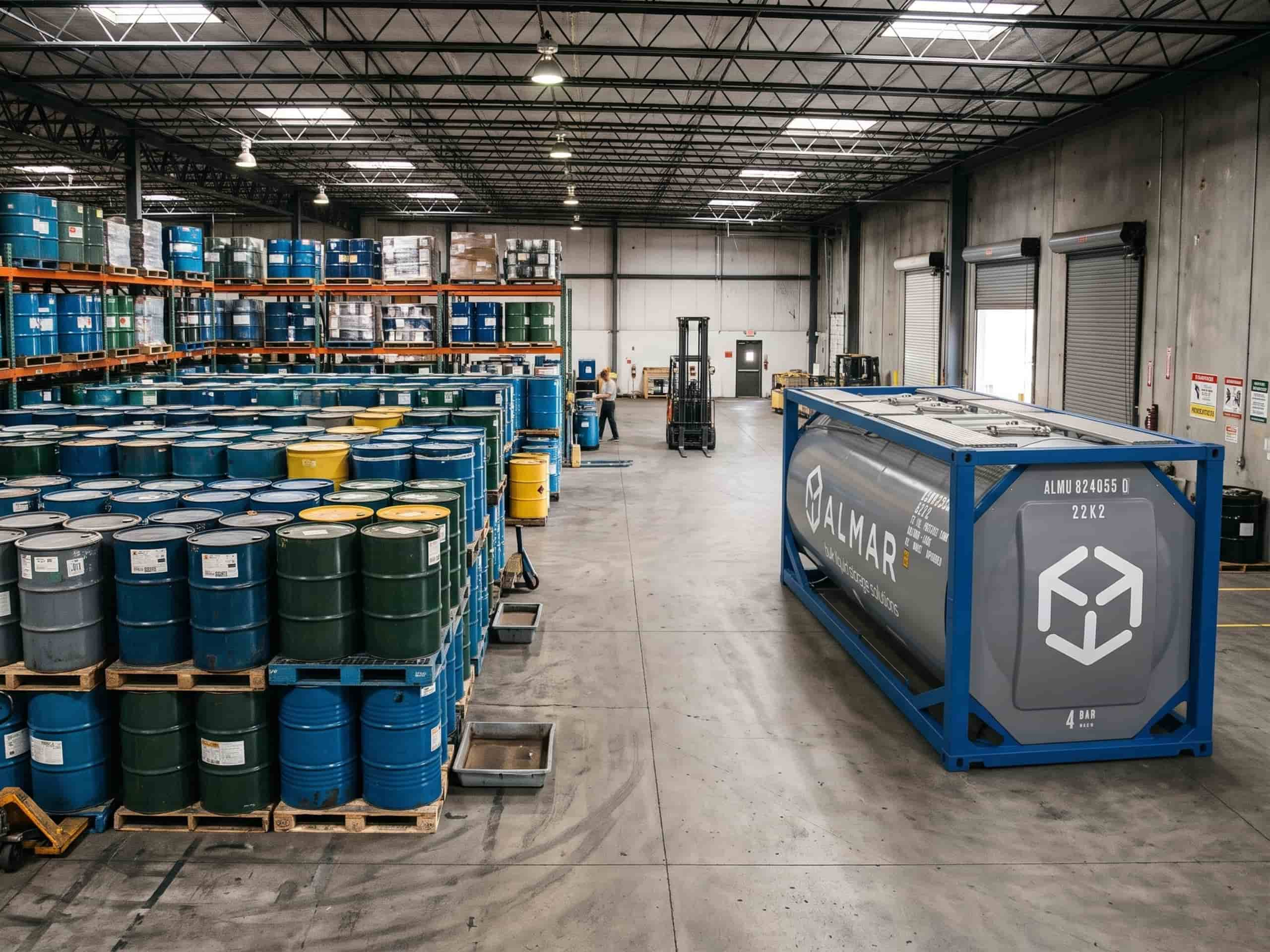
When it comes to storing liquids, the choice of container can have a bigger impact on your operation than you might expect.
For businesses handling industrial oils, chemicals, solvents and other bulk liquids, drums have long been a familiar storage option. They’re relatively easy to source, practical for smaller quantities and allow products to be stored separately.
But as storage requirements grow, managing dozens or even hundreds of individual drums can become time-consuming and costly.
This is where ISO tank containers offer an alternative. So, which option makes more sense for your business?
Understanding the Difference
Drums are individual containers, commonly available in 200-litre sizes, used to store and handle smaller quantities of liquids. They can be made from steel or plastic, depending on the product being stored.
ISO tanks, also known as ISOtainers, are specialised stainless-steel tanks housed within a protective steel frame. They’re designed for bulk liquid storage and can accommodate a wide range of compatible products.
Almar’s ISO tank range includes capacities of up to 26,000 litres, providing businesses with a substantial amount of liquid storage in a single unit.
1. Storage Capacity: One Tank or 130 Drums?
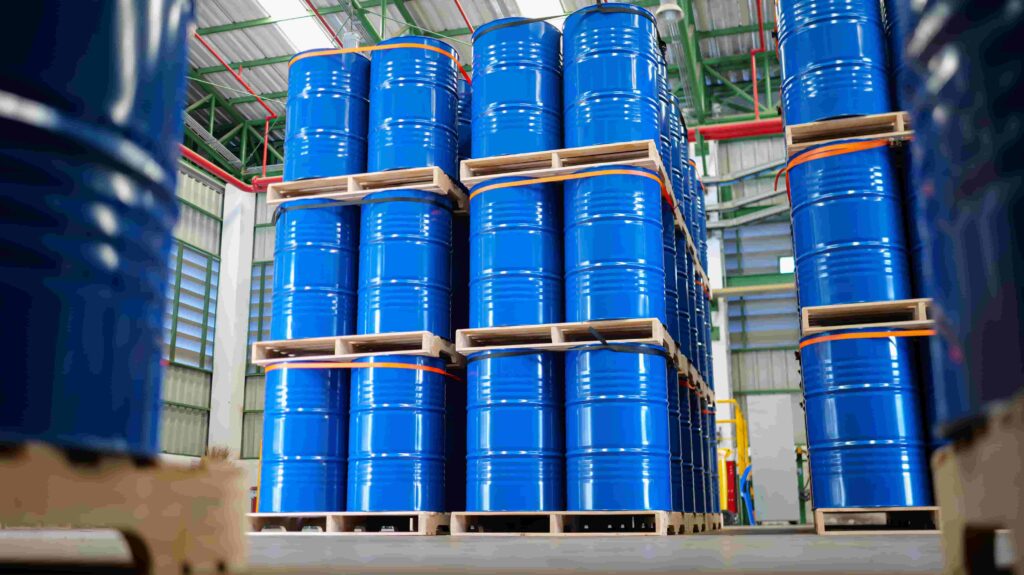
One of the biggest differences between ISO tanks and drums is the amount of liquid they can hold.
A standard 200-litre drum may be perfectly adequate for smaller volumes. However, storing 26,000 litres would require approximately 130 drums.
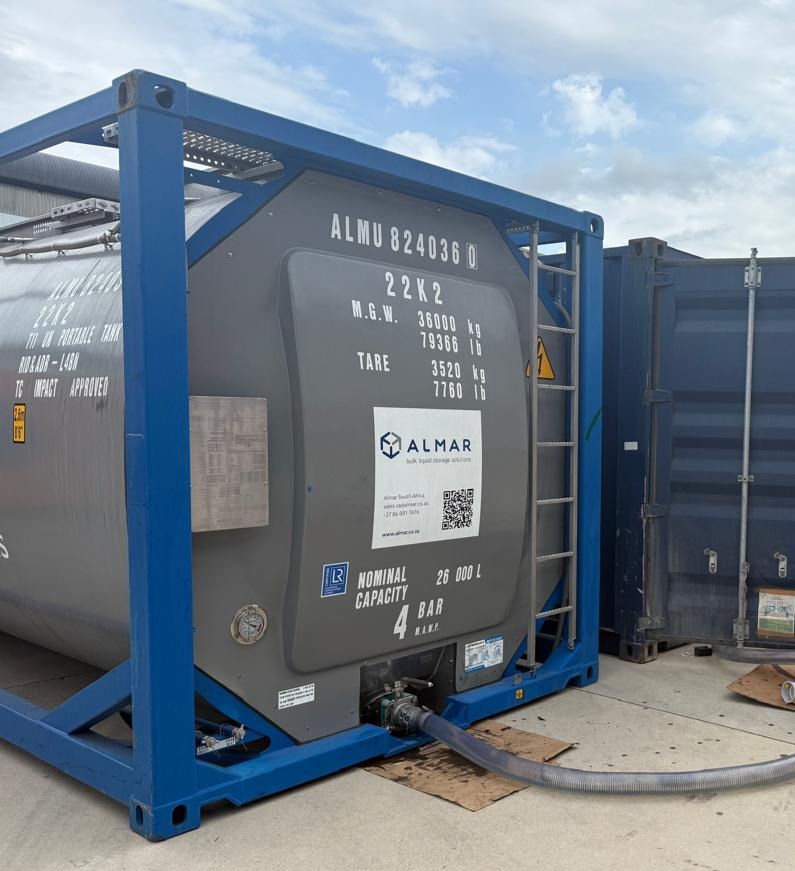
An ISO tank can provide that nominal storage capacity in one unit, subject to the product, tank specifications and permitted filling limits.
For businesses regularly handling large volumes of the same liquid, this can simplify storage management considerably.
Instead of organising and monitoring numerous individual containers, you have a centralised bulk storage solution.
2. Handling: Less Work, Fewer Transfers
Every drum needs to be filled, moved, positioned and eventually emptied.
When you’re dealing with large quantities, these individual handling tasks add up. They require staff time, equipment and careful procedures to minimise spills and product loss.
ISO tanks are designed for bulk filling and discharge, reducing the need to handle numerous smaller containers.
For operations that regularly receive or use substantial volumes of liquid, this can make day-to-day processes more efficient.
It also means fewer individual containers to keep track of.
3. Safety: Reducing Unnecessary Handling
Safety is an important consideration when storing any liquid, particularly chemicals, oils and solvents.
Both drums and ISO tanks can provide suitable containment when correctly selected and used.
However, the more frequently a product needs to be transferred between containers, the more opportunities there may be for spills, leaks or accidental exposure.
ISO tanks allow compatible liquids to be stored within a single enclosed vessel, reducing the number of individual containers and associated handling activities.
Of course, the correct tank specification, product compatibility, safe filling procedures and appropriate storage conditions remain essential.

4. Cost: Looking Beyond the Rental Price
When comparing ISO tanks and drums, it’s worth considering the overall cost of managing your liquid storage rather than focusing only on the initial price.
Drums can be economical for smaller volumes, especially when businesses already have suitable storage facilities and handling equipment.
But larger operations may face additional costs associated with:
- Purchasing or replacing drums
- Labour required for filling and emptying
- Handling and storage equipment
- Cleaning and disposal of used packaging
- Managing spills, residue and product losses
ISO tank rentals can help reduce some of these costs by consolidating bulk liquids into fewer storage units.
However, tank rental, cleaning, site preparation and filling or discharge equipment must also be considered.
For businesses weighing up these options, Almar offers ISO tanks for both rental and sale, allowing customers to choose an arrangement that suits their storage requirements.
The most cost-effective option ultimately depends on the volume, type of liquid and how frequently it’s handled.
5. Space: Making Better Use of Your Storage Area
A large collection of drums can quickly take up valuable floor space, particularly when access routes, spill containment and safe handling areas need to be maintained.
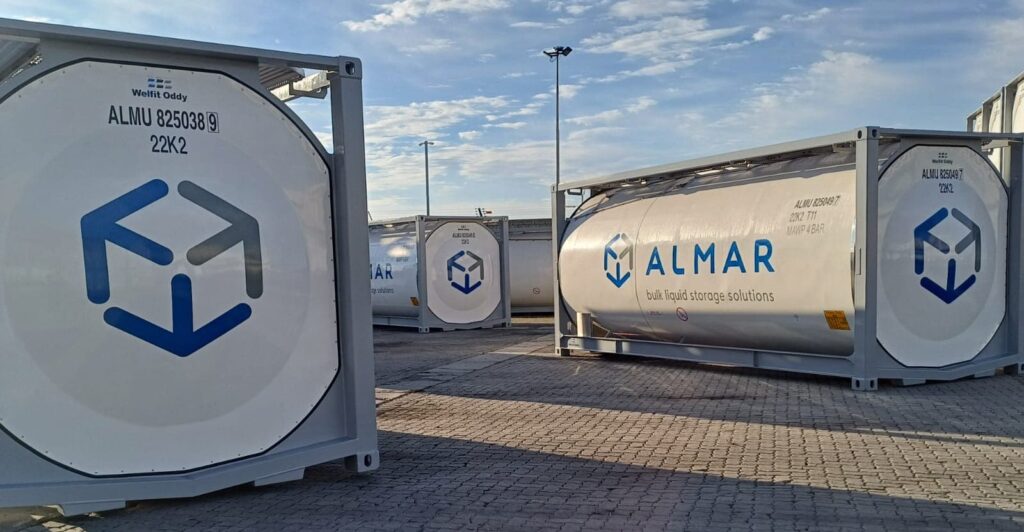
ISO tanks provide high-volume storage within a standard container footprint, which can be useful for businesses with limited space.
Rather than arranging numerous drums across a storage facility, a single ISO tank may accommodate the required bulk volume in a more consolidated setup.
The available space, ground conditions, access requirements and applicable safety regulations should always be assessed before positioning a tank.
6. Sustainability: Less Packaging to Manage
Packaging waste is another factor worth considering.
Drums can be reused or recycled where appropriate, but businesses using large quantities may still need to manage a significant number of empty containers.
ISO tanks are designed for repeated use over many years.
By reducing the need for individual packaging, they can help businesses limit packaging waste associated with bulk liquid storage.
For companies looking to improve resource efficiency, this is another potential advantage.
Finding the Right Bulk Liquid Storage Solution
Choosing between drums and ISO tanks comes down to more than capacity alone.
The type of liquid, storage volume, available space, handling requirements and overall operating costs all play a role.
For smaller quantities or multiple products, drums may be the sensible choice. For larger volumes of compatible liquids, ISO tanks can offer a more streamlined and practical approach.
Whether you’re expanding your storage capacity or considering a move away from drums, Almar’s team can help you assess your requirements and find a suitable ISO tank solution.
Need a bulk liquid storage solution? Get in touch with our team to discuss your requirements.